
Living with autoimmune
7 Things Women With Autoimmune Conditions Wish Their Doctor Did — That an AI Health Companion Actually Does (#5 is how many of them finally got answers)

If you live with an autoimmune condition, you already know the script. You wait six weeks for the appointment. You get about eighteen minutes* to explain months of symptoms. Your labs come back “normal.” And somewhere between the door and the parking lot, you realize nobody actually heard you.
You’re not imagining it, and you’re not alone: in one national survey, 45% of autoimmune patients said they were labeled “chronic complainers” in the years before anyone figured out what was wrong.** Before we get to what’s changing, take a guess at the number that explains why so many women are done waiting:
How long does it take the average autoimmune patient to get a correct diagnosis?
Four and a half years. Four different doctors.*** Not because doctors don’t care — but because the system gives them eighteen minutes and zero memory of what you said last visit. Autoimmune conditions live in the patterns: the flare that follows the bad week of sleep, the joint pain that shows up two days after certain meals. Patterns don’t fit in eighteen minutes.
That’s the gap Coco was built for — an AI health companion that lives on your phone, listens for as long as you need, remembers everything, and helps you walk into your next appointment with a clear picture. Here’s what that actually looks like:
1. It listens for as long as you need — not eighteen minutes
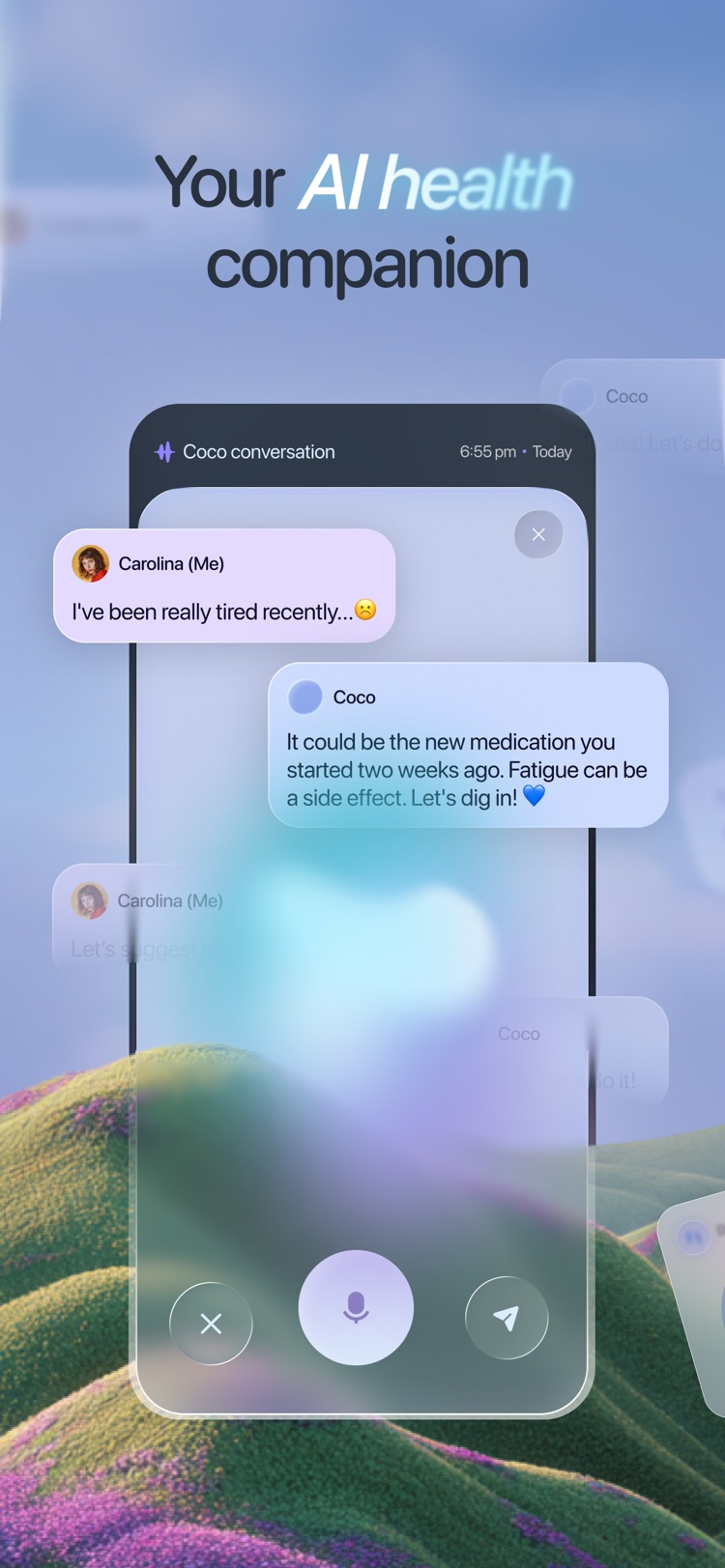
Coco is a companion you talk to — out loud or by text — about the stuff that never fits in an appointment: the weird fatigue, the flare that came out of nowhere, the thing you Googled but were too embarrassed to bring up. It never rushes you, never gives you the look, and never tells you it’s just stress. You describe it once, and it’s part of your story from then on.
2. It remembers every symptom you’ve ever mentioned
The nurse asks “any changes since last time?” and your mind goes blank — because “last time” was February. Coco’s memory doesn’t reset between visits. Every symptom, every flare, every “weird thing” you mentioned in passing three months ago is kept, organized, and connected — so the pattern you could never quite prove finally has a paper trail.
A real kind of Coco check-in
3. It checks in on you — you don’t have to reach out
Here’s the part nobody in your care team has time for: follow-up. Coco checks in on you — how the new routine is going, whether the flare passed, how you slept. Not spammy notifications; an actual “how are you doing?” from something that remembers what “doing” means for you. For a condition that lives between appointments, someone watching between appointments changes everything.
4. It connects dots across your whole body
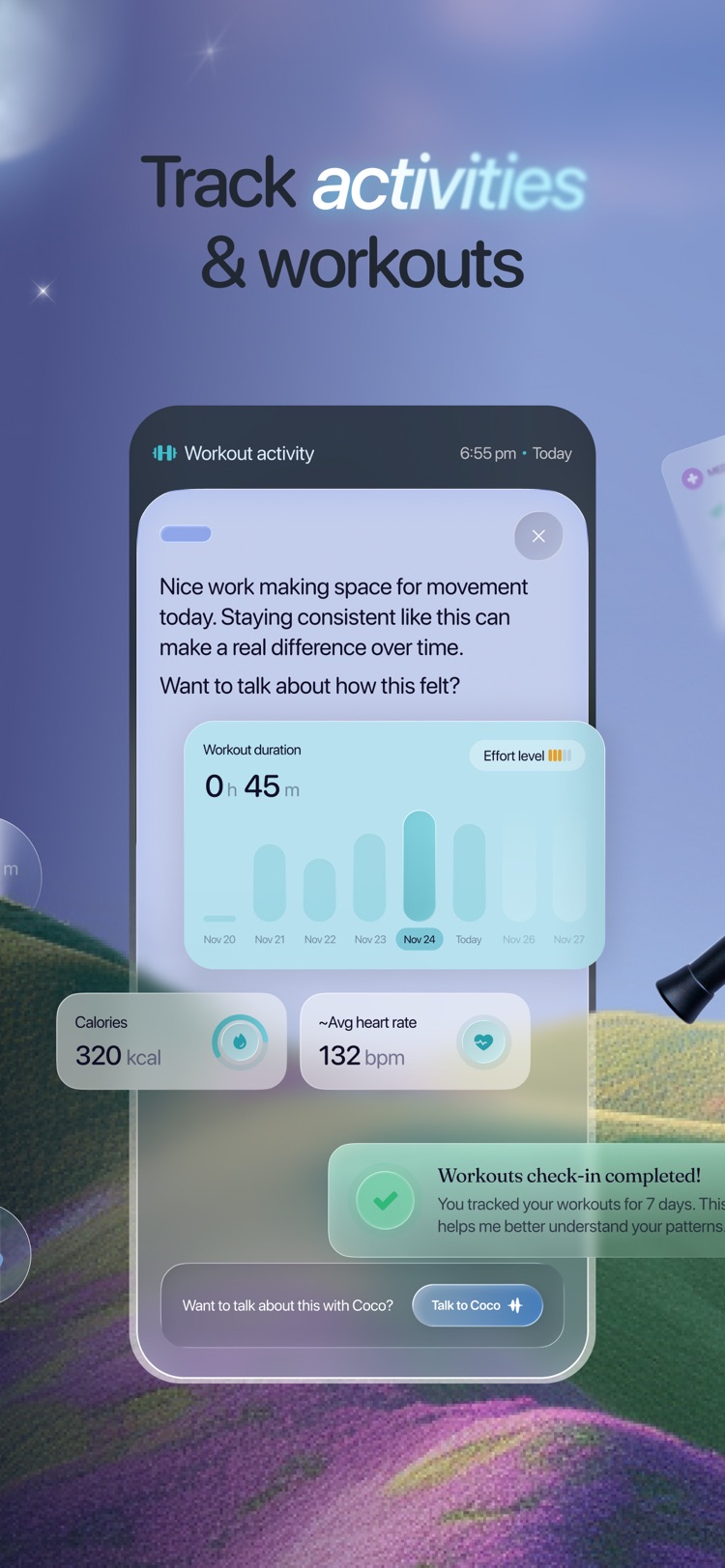
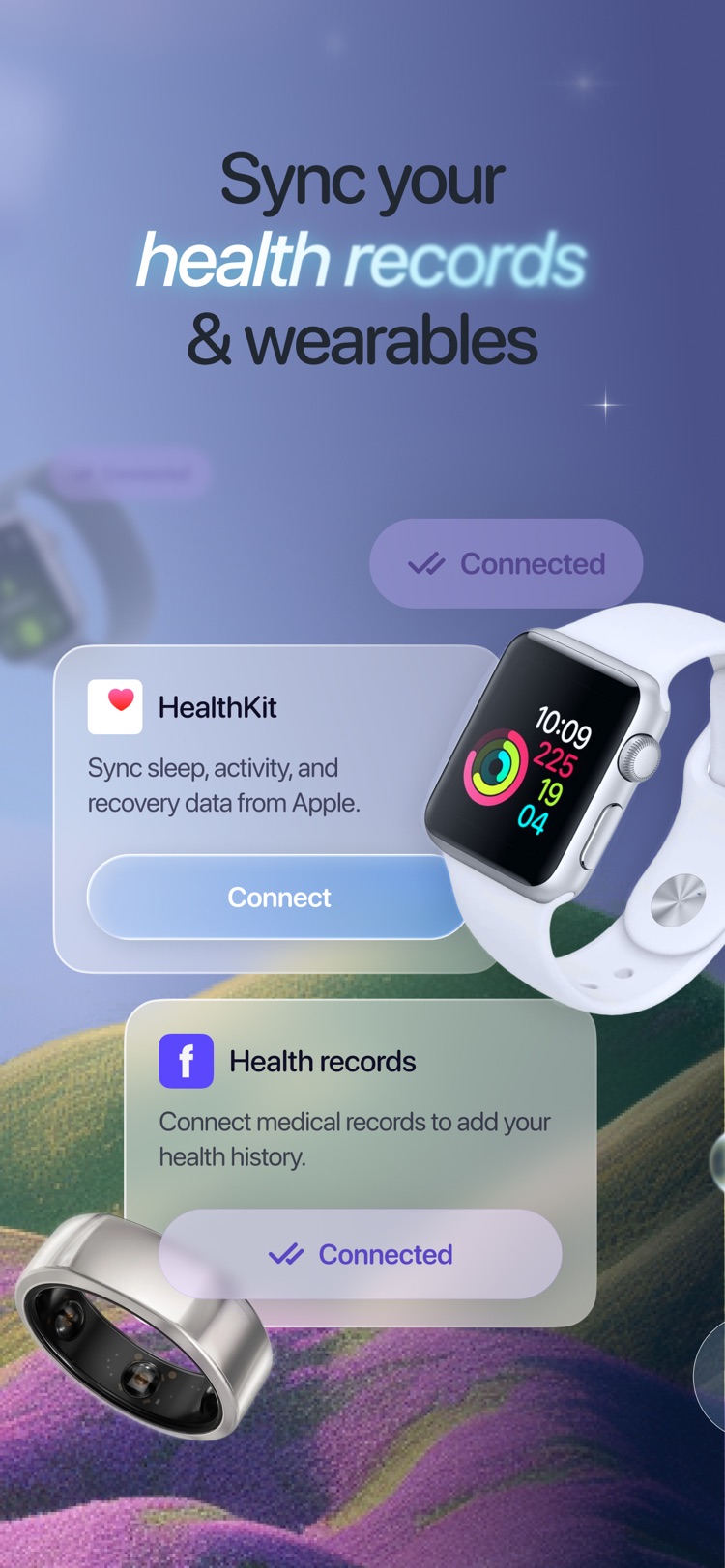
Autoimmune symptoms don’t stay in one lane — sleep, stress, food, weather, cycle, meds all pull on each other. Coco syncs with Apple Health and 300+ devices and trackers, and lays your symptoms on top of all of it. That’s how “I feel terrible and I don’t know why” slowly becomes “my flares tend to follow this” — something you can actually act on, and actually show your doctor.
5. It gets you to your appointment with a clear picture
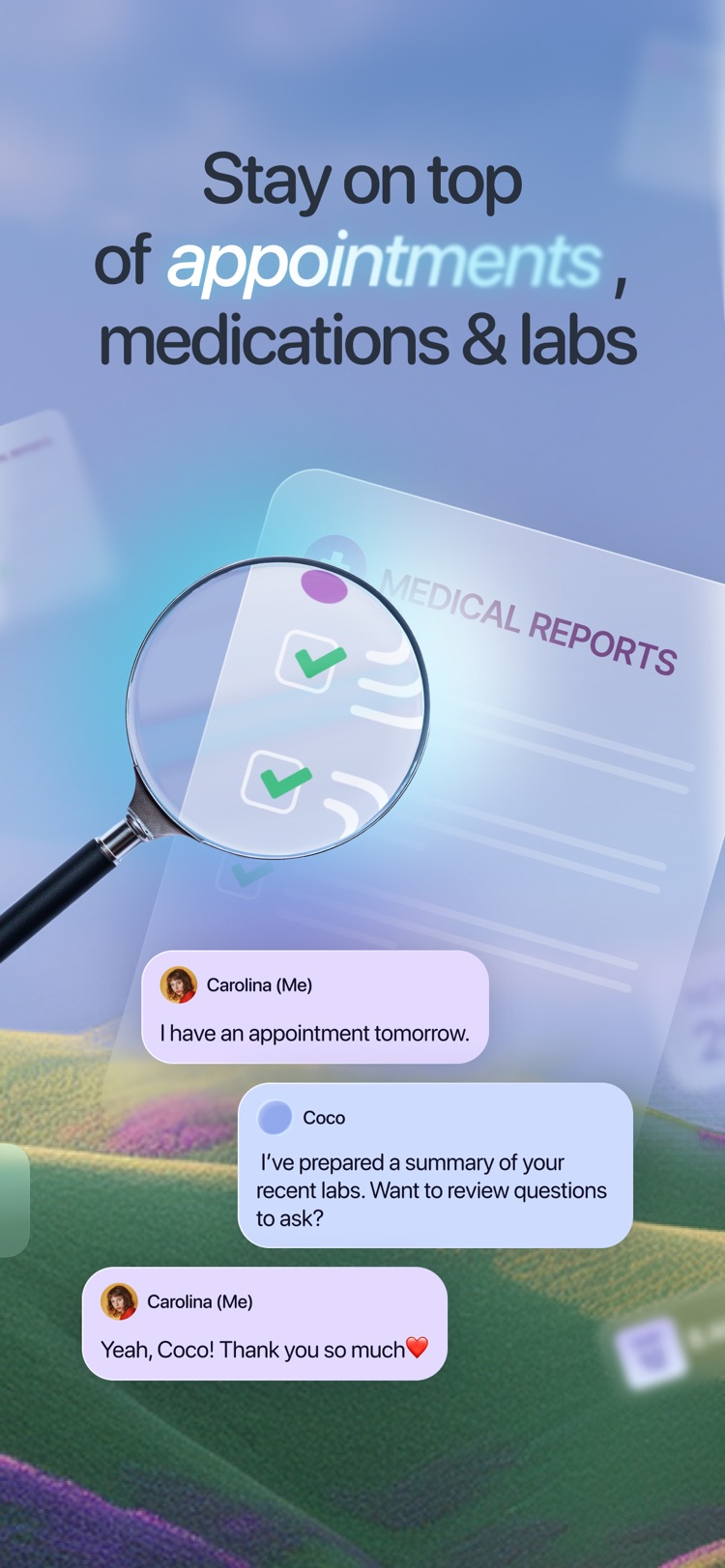
This is the one that changes outcomes. Coco doesn’t replace your doctor — it makes your eighteen minutes count. Before your visit, it helps you pull the story together: a clean timeline of symptoms, the patterns it’s noticed, the questions worth asking, even help making sense of your lab results afterward. Women who’ve spent years being told “everything looks fine” describe the same moment: the first appointment where they walked in with receipts — and finally got taken seriously.
Why women with autoimmune conditions use Coco
A companion in your corner, every day
Voice or text, day or night — a companion that never rushes you out the door.
Log the hard days in seconds — Coco keeps the timeline so you don’t have to.
Sleep, stress, food, cycle, weather — Coco watches how they move with your symptoms.
Appointment prep, question lists, and plain-English help with your results.
6. It’s there at 2 a.m. — so you can stop scaring yourself on Google
Every chronic-illness night ends the same way: forty tabs deep, convinced it’s something terrible. Coco replaces the 2 a.m. spiral with an actual conversation — calm, grounded in your history, not the internet’s worst-case file. It won’t diagnose you (nothing on your phone should). It will help you understand what you’re feeling, what’s worth watching, and what’s worth a call to your doctor.
7. It costs less than the parking at your specialist’s office
A specialist visit runs hundreds of dollars for eighteen minutes, a few times a year. Coco is there every single day — the check-ins, the tracking, the prep, the pattern-watching — for less than a coffee a week. It’s not a replacement for your care. It’s the continuity your care has always been missing, at a price that finally isn’t the barrier.
Your first week with Coco
In their own words
Individual experiences vary. Coco does not provide medical advice, diagnosis, or treatment.
You’ve waited long enough to be heard
Maybe it really does take 4½ years and four doctors. Or maybe the next appointment goes differently — because this time, you walk in with the whole story: the timeline, the patterns, the receipts. That’s what Coco is for. Try it free for a week — tell it the thing you’ve been trying to get someone to hear. See what it’s like when something finally listens.
Start my free week with Coco →
Coco is an AI health companion, not a medical provider, and is not a substitute for professional medical advice, diagnosis, or treatment. Always consult your doctor about your health. If you think you may have a medical emergency, call 911.
This page was published by Coco Health. Individual experiences are unique and may vary.
*** Average time to autoimmune diagnosis — ~4.5 years and 4 doctors: Autoimmune Association (AARDA) patient survey.
* Average U.S. physician visit length — ~18 minutes: Neprash et al., JAMA Health Forum (2021).
** 45% of autoimmune patients labeled “chronic complainers” pre-diagnosis: Autoimmune Association (AARDA).
**** ~80% of autoimmune patients are women: Fairweather & Rose, American Journal of Pathology.